Concerns About The Criminalization Of Colonialism Being Referred To The International Criminal Court
Despite nearly two weeks passing since the enactment of the law criminalizing brutal French colonialism in Algeria, the French have not been able to stomach it. After politicians calmed down somewhat, it was the turn of French historians, among them historian Jean-Marc Albert, who received this law with great anger and skepticism regarding its background and objectives.
In an article for “Le Journal du Dimanche” on Sunday, Jean-Marc Albert described the law criminalizing French colonialism in Algeria as a “poisoned chalice” presented to Paris by its former colony, questioning whether this issue would transcend the political dimension to the criminal dimension, which would lead France into a maze it never wished to enter.
The French historian wondered if Algeria “would resort to the International Criminal Court to prosecute Paris?” These procedures would entail criminal consequences for French soldiers or officers who are still alive and whose hands are stained with the blood of Algerians, which could make them hunted outside their country, because crimes of genocide and crimes against humanity are not subject to statutes of limitations, according to relevant international norms and laws.
In the opinion of Jean-Marc Albert, whose positions largely align with those of the French right and far-right, obsessed with everything Algerian, many French politicians and observers see this “risky law as a response to the hard-line and racist policy of former Interior Minister the sinister Bruno Retailleau towards Algerian immigrants.”
The author of the article linked the developments between Algeria and France, which led to the enactment of the law criminalizing colonialism, to what he considered “the growing hatred towards the former colonial power.” He attributed this to Algeria’s decreased need for France, unlike in the early years of independence, while in the present day, it has many options.
Although France dared to glorify the brutal practices of French colonialism in its former colonies in 2005, Jean-Marc Albert sees no objection to describing the enactment of the law criminalizing French colonialism in Algeria as “provocation,” a scientific blunder for someone presented as a historian in French media.
The same historian also attacked even the French who do not share his right-wing views, calling them “supporters of anti-colonial thought who dare to portray colonialism, at least at the highest levels of the state, as an artificial image of Nazi genocide and a crime against humanity,” because it does not aim to calm the wars of memory, but rather aims, as he claimed, to “satisfy Algeria’s desire for revenge against its colonizers.”
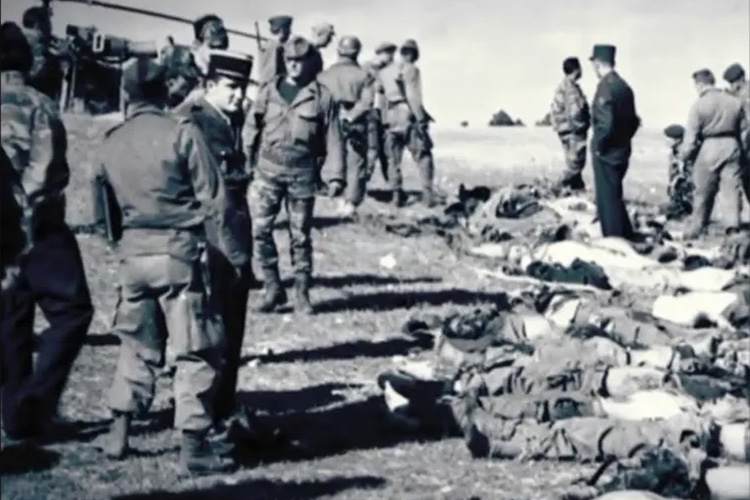
Jean-Marc Albert also tried to dilute legitimate Algerian demands and the possibility of escalation by referring the case to the International Criminal Court, expressing surprise at the Algerian side’s inability to mention “a single positive example” of French colonialism in Algeria, in a provocation that goes beyond description, as long as this historian ignores the brutal massacres, wars of extermination, and crimes against humanity in which France was involved in Algeria.
In a sadistic tendency, the French historian attempts systematic disinformation by considering French colonialism as part of the wheel of history that did not begin in 1830, but rather tries to conduct a survey throughout the ages, and tries to link what the Arab Muslims did in Andalusia over seven centuries with what France did in Algeria, and before that the Ottoman presence, in an approach that cannot be straight, due to the brutality that distinguished French colonialism from others in Algeria or in the rest of the countries that suffered from this nefarious phenomenon.