Debate Continues in France on Criminalising Colonialism
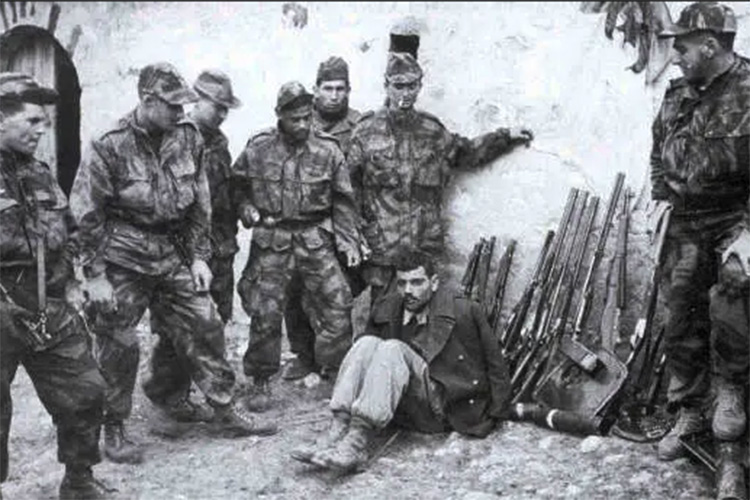
The Algerian parliament’s approval of a draft criminalising French colonialism in Algeria continues to generate debate in political and academic circles, particularly in Parisian salons. While some view this draft as a natural development in a decades-long conflict between the two countries, a conflict that has branched out from the political to the legal spheres, others perceive it as an affront to French pride, given the criminalisation of some of its icons, such as the war criminal Marshal Robert Bugeaud.
In this context, Radio France, a public broadcaster, believes that the law criminalising French colonialism in Algeria “represents a break in its relationship with its colonial history, as it now demands reparations from the French state.” The broadcaster considers the Algerian move “part of a global trend affecting formerly colonised countries, in which Algeria is playing a leading role,” based on the international conference on colonial crimes held in Algiers at the end of last November.
On Monday, January 12, Radio France hosted Adlane Mohammedi, a geopolitical researcher and expert at the Centre for International Studies and Research (CERI), and a lecturer at Paris 3 University and the Institute of International Studies and Research, and Akram Belkaid, editor-in-chief of Le Monde Diplomatique, for a talk show. They were asked about the prospects following the enactment of this law, which has sparked considerable controversy in Paris and was described by the French Foreign Ministry as “an openly hostile act.”
According to the editor-in-chief of Le Monde Diplomatique, the Algerian side kept this issue within a political framework for decades, demanding an apology without compensation. However, faced with the French side’s disregard, it decided to shift the battle to the legal arena after the National People’s Assembly (the lower house of parliament) adopted these demands within a purely legal context.
The spokesperson believes the issue is not entirely out of the political arena, as the draft still has further steps to take. It has not yet been adopted by the National Assembly (the upper house of parliament), meaning the ball is now in the French authorities’ court to take the initiative and respond positively to Algerian demands. However, the editor-in-chief of Le Monde Diplomatique believes that resorting to legal action was inevitable, given the failure of politics to resolve this dilemma that has plagued bilateral relations for decades.
Contrary to what some French politicians claim, Akram Belkaid believes that enacting a law criminalising French colonialism in Algeria “does neither constitute an accusation against present-day France, nor does it tell the French people that they are responsible for the colonial era. Rather, it attacks a specific period in French history.” He explained that the French themselves are divided on this period. Some, like the left-wing political elite, condemn it, while others, referring to the right-wing and far-right elites, completely reject this view. These elites still consider Algeria’s independence a major loss for the French state.
Political geography researcher and expert at the Centre for International Studies and Research, Adlane Mohammedi, speaks of a shortcoming on the part of France regarding its historical responsibilities in Algeria. He focuses on the lack of response from French officials to repeated Algerian demands for the handover of maps of nuclear tests and helping the Algerian authorities to clean up vast areas contaminated by nuclear and chemical waste, which persisted into the post-independence period, leaving serious repercussions on the fauna and flora and the population as well.
The researcher believes that Algeria’s move towards a legal approach to the colonial memory issue will fuel political debate in France, particularly among right-wing politicians, who consider the Algerian step an “insult” to France. This includes figures such as the former Interior Minister, the head of the Republicans LR party, Bruneau Retailleau, and former Prime Minister Édouard Philippe, a potential candidate in the upcoming French presidential election.
In a related context, the French historian Jean Sévillia wrote an article in Le Figaro Magazine entitled “Marshal Bugeaud Now Treated as a Criminal: History or Ideology?” following the Algerian authorities’ enactment of a law criminalising French colonialism in Algeria. The war criminal, Marshal Bugeaud, was appointed Governor-General of Algeria in 1840 and was the architect of the conquest of the new colony.