France’s Interior Minister Opposes Ban On Minors Wearing Hijab
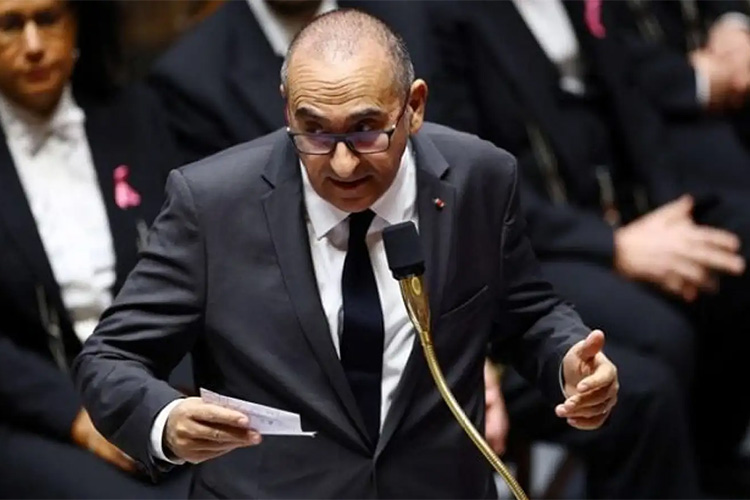
France’s Interior Minister, Laurent Nuñez, explicitly opposed a parliamentary proposal to ban minors from wearing the hijab in public places, urging authorities to be cautious about taking measures that could bring woes to the country.
Nuñez, the former Paris police chief who was appointed Interior Minister in October, succeeding his hard-line predecessor Bruno Retailleau from “The Republicans” party, told “BFMTV” on Sunday that “the proposal deeply shocks our Muslim citizens who may feel hurt,” adding, “I do not support it in this form.”
He reminded authorities of the need for extreme caution and to focus on “targeting Islamists with an extremist interpretation of religion who seek to impose Sharia instead of the laws of the Republic.”
Nuñez’s statements came days after Laurent Wauquiez, head of the parliamentary bloc for the right-wing Republican party, submitted a bill to the National Assembly to ban minors from wearing the hijab in public places.
Opinions varied on the proposal to ban minors from wearing the hijab, even within President Emmanuel Macron’s government, amid fears that the far-right is most likely to win the 2027 presidential elections.
Equality Minister Aurore Berg expressed her support for the proposal, claiming it was for “the protection of children,” stating in remarks to “CNews”: “I have no doubt that there is now a majority in the National Assembly and the Senate to vote in favor of it.”
The issue of tightening legal restrictions on wearing the hijab in public places is increasingly raised in France, which has one of the largest Muslim communities in Europe, with the growing strength of the far-right.
Last May, the center-right Renaissance party, led by Macron and headed by former Prime Minister Gabriel Attal, proposed banning “the wearing of the hijab in public places for minors under 15 years of age”.
Under current French legislation, which is a secular state according to its constitution, government employees, teachers, and students are not allowed to wear any conspicuous religious symbols such as crosses, Jewish kippahs, Sikh turbans, or hijabs in government buildings, including public schools.
Nuñez said: “We must be careful with measures that could carry a great stigma,” referring to the Eustache-Brinio report prepared by right-wing senators to combat Islamism.
A report issued by a team of 29 French senators, chaired by Jacqueline Eustache-Brinio, revealed on Thursday about 40 measures to combat what was described as “Islamic extremism,” which they believe has become a growing threat in some regions of France.
For its part, the Grand Mosque of Paris issued a strongly worded statement condemning the systematic discrimination targeting Muslims in France, which fuels a climate of suspicion towards their religious practices and infringes upon their fundamental freedoms.
The Grand Mosque highlighted several proposals in the report, most notably banning the wearing of the hijab for chaperones on school trips, as well as prohibiting fasting during Ramadan for minors under 16, explaining that fasting is an obligation linked to puberty and is not automatically imposed on all children.
It considered that these recommendations reveal “a desire to impose restrictions on purely Islamic practices,” akin to “an exceptional system directed against Muslims”.