French Right Moves to Protect Agents From Being Stripped of Algerian Nationality!
Three weeks after the Algerian National People’s Assembly approved new amendments to the nationality law, French political circles, particularly those on the right, began mobilising to protect individuals targeted by the Algerian nationality law for specific, predetermined acts.
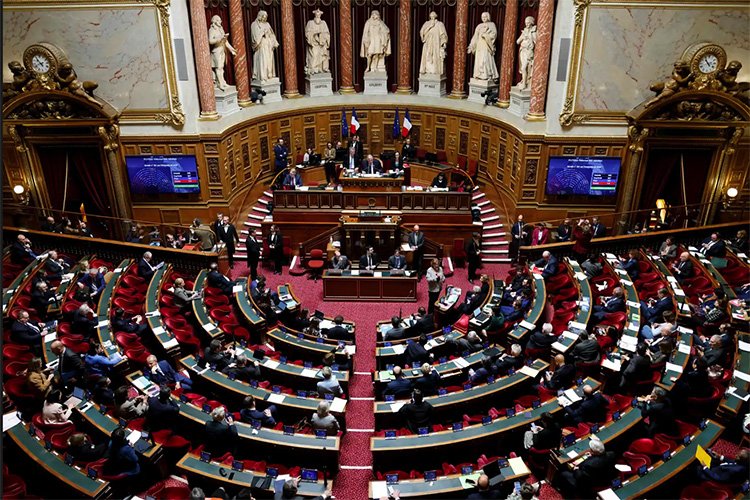
This move in the form of a written question submitted on January 15, 2026, by Senator Valérie Boyer, a member of the Senate (the upper house of the French parliament) and a member of the Republicans LR group.
The question, checked out by Echorouk, was addressed to the French Interior Minister and included a clear attempt to defend groups directly affected by the recent amendments to the Algerian Nationality Law, while promoting what she described as potential repercussions for France and the European Union.
The French senator justified this move by claiming a “deteriorating” bilateral relationship between Algeria and France, attempting to link Algerian sovereign decisions to chronic tensions surrounding immigration, consular affairs, and historical memory—a narrative frequently employed by French right-wing circles whenever Algeria takes measures in conflict with French interests.
Boyer claimed that bilateral relations were strained by disagreements over cooperation in deporting irregular migrants and issuing consular travel documents, ignoring that these matters are governed by clear agreements and that Algeria has long complained about France’s selective approach to them, particularly when it comes to Paris’s domestic interests.
The senator added that tensions, as she described them, escalated further after the Algerian parliament ratified a law on December 24, 2015, criminalising French colonisation and classifying it as a state crime. She explained that the law contains provisions aiming at obtaining official apologies and reparations from France for crimes committed during the colonial period, notably classifying nuclear tests in the Sahara and torture practices—a move the French government deemed “hostile.”
In a related context, the French MP exploited what she termed “individual” situations to bolster her arguments, including the case of writer Boualem Sansal, which she attempted to frame as a matter of opinion, ignoring the legal framework governing such cases in Algeria. She also cited the case of French journalist Christophe Gleizes, alleging irregularities in a discourse consistent with her usual attempts to discredit the Algerian judiciary.
Senator Boyer reiterated a written question she had submitted in 2021 regarding a previous draft amendment to the Algerian Nationality Law. At the time, she claimed the amendment targeted Algerians abroad under the pretext of harming the state’s interests. She referred to the French Interior Ministry’s 2022 response, which acknowledged a lack of accurate statistics on dual nationals, merely citing the number of residency permits granted to Algerians in France in 2020.
The senator implicitly acknowledged that Algeria has adopted a de facto reform of its nationality law by tightening the conditions for deprivation of nationality for Algerians residing abroad by broadening the grounds for it. She then alluded to what she termed French and European “concerns,” in a clear attempt to internationalise an issue that falls squarely within the sovereign purview of the Algerian state.
The French politician also questioned the effectiveness of what the French government calls its “gradual approach to addressing bilateral difficulties with Algeria”, demanding clarification on the diplomatic, legal, and even European levers that could be used to pressure Algeria. She further requested statistics on dual nationals affected by the amendments, a move reflecting France’s preoccupation with protecting specific groups—a blatant attempt to shield those targeted by these measures.
The senator concluded her question with a tone that implied blatant interference in Algerian sovereign decisions, as she demanded what she called “safeguards France intends to put in place” to prevent any violation of fundamental rights or the occurrence of cases of statelessness, while indicating the possibility of activating bilateral, European, and international initiatives.