From Border Fortification to Strategic Deployment in Niger
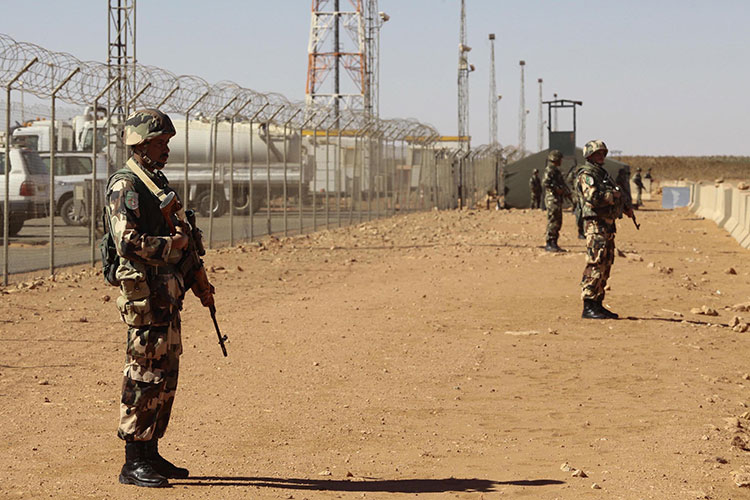
Participants in a roundtable organized by the National Institute for Comprehensive Strategic Studies (NICES) under the title “The Evolution of Algeria’s Defensive Posture in the Sahel: From Border Fortification to Strategic Deployment in Niger” underscored the importance of Algeria’s approach, which integrates economic, developmental and security dimensions to strengthen the country’s role in promoting stability across the Sahel, particularly amid the region’s mounting challenges.
Speakers agreed that addressing security threats in the Sahel requires a comprehensive vision that goes beyond border protection to encompass stronger regional cooperation, economic connectivity projects and infrastructure development—measures they said are essential to consolidating security and stability while advancing development.
In his presentation, titled “Securing Algeria’s Land Borders: The Role of the People’s National Army,” Ismail Djouhri, professor of t of Higher Education in the Faculty of Political Science and International Relations at the University of Algiers 3, highlighted the importance of strategic border fortification and the rational allocation of resources and human capabilities. He stressed that security and stability are prerequisites for development and cooperation, arguing that sustainable development cannot be achieved in the absence of peace and security.
He also emphasized Algeria’s contribution to maintaining security and stability as a foundation for strengthening cooperation with neighboring countries, across Africa more broadly, and for supporting the continent’s development efforts.
Journalist and interviewer, Ali Kafsi, in his presentation entitled “Algeria’s New Strategic Vision toward Niger: The 2026 Turning Point and the Imperative of Building Collective Security in the Sahel,” examined the importance of strengthening Algerian-Nigerien cooperation in addressing regional security challenges within a framework of collective security and closer coordination among Sahelian countries.
He stressed the need for African-led solutions to African problems, the activation of regional cooperation mechanisms, and the exchange of expertise and intelligence, while linking security concerns to their economic and developmental dimensions to ensure a more integrated response to the region’s challenges.
Professor and senior researcher at Ferhat Abbas University Setif 1 (eastern Algeria), Salah Salhi meanwhile, highlighted the strategic importance of connectivity and infrastructure in fostering regional integration. He pointed to the development of road and railway networks, energy pipelines and digital infrastructure as key to strengthening Algeria’s position as a regional hub for energy, trade and transit.
He also addressed the role of investment and economic partnerships in reinforcing economic sovereignty and linking regional economies to regional and global value chains, arguing that connectivity projects could serve as drivers of development and integration among Sahelian countries.
Academic and research Nabil Bouyebia at Mohamed Seddik Ben Yahia University in Jijel (eastern Algeria) examined the evolution of Algerian-Nigerien relations, tracing their historical foundations in solidarity, good-neighborly relations, and social, cultural and commercial ties, as well as their progression toward greater security and diplomatic coordination and development cooperation.
He also highlighted the importance of developing border areas and expanding energy cooperation, particularly through the Trans-Saharan Gas Pipeline project linking Algeria, Niger and Nigeria, which he said offers opportunities to bolster energy security, enhance continental connectivity and promote local development.
In his closing remarks, Abdelaziz Medjahed, Director General of the National Institute for Comprehensive Strategic Studies, called for assessing developments in the Sahel within a broader geopolitical context stretching from Western Sahara to Somalia, while taking into account the roles of international powers active in the region and their implications for its stability.
He reiterated that counterterrorism efforts require coordinated action and adherence to international law, alongside winning the trust of local communities and populations, whose support he described as indispensable to achieving lasting security and stability.