Is Algeria’s peace initiative for Libya petering out?

-
-
2961
-
0
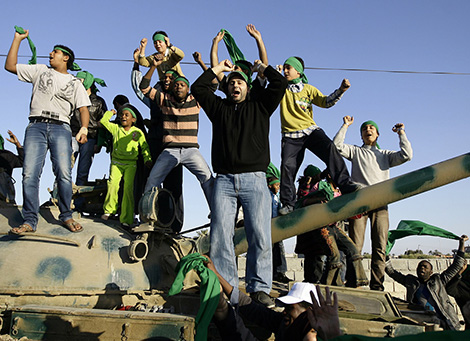
Uncertainty now prevails about the feasibility of the Algerian initiative aimed at bringing the Libyan parties at issue around the negotiating table in Algiers in the hope of thrashing out a lasting solution to the protracted Libyan crisis.
The Algiers broad-based meeting on Libya was first planned for October 13th, and then it was put off until the 18th of the same month before being adjourned until late October.
As a matter of fact, only three days remain until the end of October and nothing tangible and substantial has come out regarding this long-delayed meeting aimed at paving the way for a final settlement of the Libyan crisis through an all-inclusive dialogue under Algeria’s well-meaning mediation which has the full support of the United Nations and the United States.
Even the recent visit to Algiers by Egypt’s foreign Minister Sameh Shoukri and his discussions on this burning issue with senior Algerian officials has brought nothing concrete about the exact date for the convening of such an encounter designed to defuse urgently the Libyan crisis which shows no sign of abating.
Egypt’s Foreign Minister Sameh Shoukri said Egypt is coordinating with Algeria regarding the crisis in Libya, after a meeting in Algiers with Algerian foreign minister Ramtane Lamamra earlier this week.
He was also received by Algerian President Abdelaziz Bouteflika.
In a statement to the press, Shoukri stressed the importance of working closely on developments in the country bordering Egypt and Algeria, saying the long borders between Libya and them poses a common threat, namely the infiltration of terrorists to both countries.
Fighting between armed factions in Libya since the fall of Libyan leader Moamar Kaddafi in 2011 spiked earlier this year and the country’s internationally recognized government and parliament fled Libyan capital Tripoli to the eastern cities of Bayda and Tobruk.
While fighting between government allied forces and rebels continues, Shoukri said the Libyan unity and the legitimacy of its official government must be safeguarded, assuring Egypt and Algeria see eye-to-eye on the crisis.
Shoukri stressed that any solution should be reached without foreign intervention that may increase hostilities between Libyans, and within the framework of initiatives set by its neighbors.
Algeria, which has deployed large numbers of troops to secure its southern and eastern borders with Libya and Tunisia following the rise of Islamist militants, has publicly opposed talk of Western military intervention in Libya following the recent battles among militias in the Libyan capital, Tripoli.
Foreign Minister Ramtane Lamamra said during the Madrid conference for Libya on Sept. 17, “The role of international organizations is to help rather than interfere, regardless of the form of interference, in Libya.”
Algeria realizes that the crisis in Libya is not only political, and it proposed the implementation of UN Resoultion 2174 to cut off the supply of arms to the fighting parties as a security solution.
The Algerian plan to solve the crisis in Libya is based on “the conflicting parties’ reaching security agreements that would allow them to protect the people and properties in Libya, while providing the right circumstances to keep fighting terrorism.”
US Secretary of State John Kerry expressed support for the Algerian initiative following a meeting with Ramtane Lamamra, his Algerian counterpart, who led the Algerian delegation during the UN General Assembly. John Kerry announced then a meeting of the main countries concerned with the Libyan affair.
Th meeting was held on september 22, with the participation of the United States, Algeria, Libya, Egypt, Qatar, France, Germany, Italy, Saudi Arabia, Spain, Tunisia, Turkey, the United Arab Emirates and the European Union. The final report “praised the efforts of the countries neighboring Libya, especially the Algerian initiative. The latter called on Libyan leaders and representatives of all political parties to participate as soon as possible in a dialogue that results in national reconciliation.”
Algeria wants to see the efforts undertaken with the conflicting parties in Mali repeated in Libya. Accordingly, it suggested hosting a meeting for the different Libyan parties. Ramtane Lamamra believes, “Libya has an elected parliament, … but to consolidate its legitimacy, it must take the necessary appeasement measures to create favorable conditions for an inclusive dialogue and national reconciliation.”
In the same context, the UN Support Mission in Libya chose Sept. 29 for reconciliation meetings and said that EU Special Representative Bernardino Leon called on all Libyan parties to hold a dialogue. To reach reconciliation, the disputing parties should accept UN Resolution 2174 calling for an immediate cease-fire in Libya.
But a day after the New York meeting of the 14 countries, Lamamra said that Algeria would host a dialogue between Libyans in October. An Algerian diplomatic source said that the active Libyan political parties asked Algeria to act as a mediator to end the crisis in the country and to push for an inter-Libyan dialogue, in the vein of the successful meeting of the Malians in Algeria.