The Imprisonment Of Ali Lmrabet Puts The French Authorities In Great Embarrassment
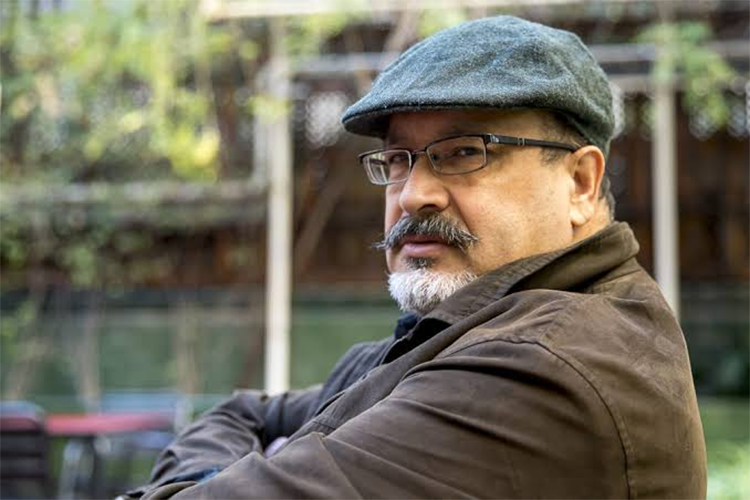
The case of the arrest of the Franco-Moroccan journalist, Ali Lmrabet, has put the French authorities in deep embarrassment. Two days after his arrest at Tangier airport and his imprisonment on charges related to his journalistic activity, Paris is still unable to formulate a statement demanding his release from the Moroccan regime, as it did in similar cases involving Algeria, such as the cases of Franco-Algerian writer Boualem Sansal and French journalist Christophe Gleizes.
This case has attracted the attention of observers, especially activists in the media sector, due to the complicit silence of the French authorities toward a citizen holding French nationality.
This was pointed out by the well-known Spanish journalist, Ignacio Cembrero, who addressed the incident, accusing the French authorities of being silent about the Moroccan regime and favoring it in cases related to human rights violations and media freedom compared to Algeria.
This came in a series of “tweets” on his account on the “X” platform, in which he spoke about what he described as the “embarrassment” caused by the case of Ali Lmrabet’s imprisonment to the French authorities.
Cembrero posted a picture of the French President, Emmanuel Macron, standing between the Franco-Algerian writer, Boualem Sansal, and the Franco-Moroccan journalist, Ali Lmrabet, and asked in the tweet: “Will President (French) Emmanuel Macron show the same interest in the fate of journalist Ali Lmrabet, who was imprisoned in Morocco, as he showed in his interest in the writer Boualem Sansal when he was imprisoned in Algeria?”
The Spanish journalist specializing in Maghreb affairs explained: “Both are French citizens. Sansal is of Algerian origin, while Lmrabet is of Moroccan origin. In the Élysée Palace in Paris, there is generally a greater leniency toward Rabat compared to Algeria regarding human rights violations”.
Ignacio Cembrero said that “the arrest of the Moroccan journalist Ali Lmrabet in Morocco caused embarrassment to France and Spain. Lmrabet is a French citizen, but he resides in Barcelona, and his wife and children are Spanish. Will the French and Spanish governments show interest in his fate? It is unlikely that Lecornu, who will travel to Rabat on Wednesday, will take any action”.
He went on to clarify: “Paris has ignored the Franco-Moroccan historian Maati Monjib, who is being harassed by the authorities in Rabat.
Madrid has not shown any interest in another political prisoner, Mohamed Ziane, 83 years old, born in Malaga and the son of a Spanish woman. Nevertheless, Lmrabet and his colleagues have shown a remarkable ability to mobilize in the past”.
The Spanish journalist also expressed his frustration with his country’s government, which has not taken any action regarding the imprisonment of journalist Ali Lmrabet, who holds Spanish nationality. He said that the Spanish Foreign Minister, José Manuel Albares, was asked about the imprisonment of Ali Lmrabet by the Moroccan regime, and he replied with surprise: “I do not know the details of the case, I will look into it”.
Ignacio Cembrero commented on the Spanish diplomacy chief’s answer with astonishment, saying: “The news spread on Sunday afternoon. This position can be explained based on three possibilities: either Albares does not read the press, or the Spanish embassy in Rabat did not inform him, or -which is more likely- he still ignores human rights in Morocco.
He had previously abandoned the political prisoner Mohamed Ziane (83 years old), a Moroccan born in Malaga to a Spanish mother, who will remain in prison until 2027”.
The veteran journalist also attacked some Spanish media outlets, led by the newspaper “El País”, which dedicated its “unsuccessful” editorial, as Cembrero said, to the case of Ali Lmrabet’s arrest, thus revealing the involvement of even the Spanish media in whitening the image of the Moroccan regime. He accused the writer of the “El País” editorial of ignoring the situation of the media and journalists in the Kingdom of the “Commander of the Faithful”, saying that they “cannot practice journalism as long as there are bloggers in prison”.
He also wondered: “Does the editorial writer know that there are currently no media outlets in Morocco that criticize the authorities? When Mohammed VI ascended the throne in 1999, there were media outlets (such as ‘Le Journal’, ‘Assahifa’, ‘Demain’, and others), noting that the editorial claimed that the Moroccan regime had turned the page on restrictions imposed on the press by the King issuing a pardon two years ago for a number of imprisoned Moroccan journalists.
Even the French media, which often tries to play the role of the primary defender of media and press freedom, settled for repeating a dispatch from Agence France-Presse (AFP), and did not even dare to transmit the statement of “Reporters Without Borders” criticizing the Moroccan regime, in clear hypocrisy.
President Abdelmadjid Tebboune had criticized the Western system in previous statements, against the background of its portrayal of the Moroccan Kingdom as an oasis of freedom and democracy, despite its awareness of the bitter truth, which is that this regime suffocates freedom of expression and violates human rights.