Possibility Of Harking To The 2015 Peace And Reconciliation Agreement Exists
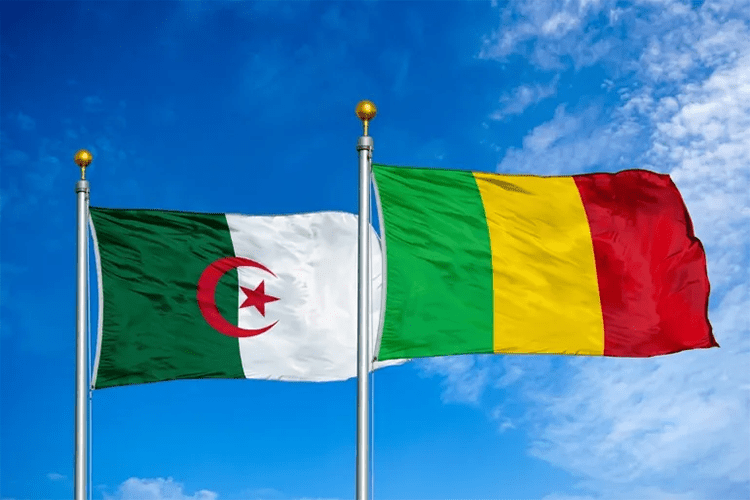
Researchers and specialists in Mali considered overcoming the previous diplomatic tension between Algeria and Mali, which was consolidated by the announcement of the return of the two countries’ ambassadors to their work and the lifting of the ban on closed airspace to the aircraft of both states, as a re-establishment of a “brotherly neighboring relationship rooted deep in history”, noting the role Algeria has played since the beginning of the 1960s until today in helping Malians solve their problems.
Malian political analyst Ibrahim Djogourga did not rule out the possibility of the ruling Transitional Military Council in Bamako agreeing to return to working with the Peace and Reconciliation Agreement signed between the Malian state and the northern Azawad opposition factions, which was among the reasons that contributed to the tension in relations between Algeria and Mali.
Djogourga said in a call with “Echorouk”, commenting on recent developments, that the return of bilateral relations was expected at any moment, because “the relations are historical, solid, and rooted deep in history, and witnessed their most flourishing stages during the era of the late President Moussa Traoré, who used to spend all his holidays in Algeria, alongside the late President Houari Boumediene”.
Ibrahim Djogourga pointed to the role of some countries that may have contributed to resolving this crisis and returning things to normal, mentioning the states of Niger and Russia, the strategic ally of Mali, Niger, and “sisterly” Algeria. He also expected that bilateral relations would witness in the future an “intensity in cooperation that does not stop at the two countries, but extends to the rest of the Sahel countries, especially regarding security control in the region”.
As for returning to work with the Peace and Reconciliation Agreement signed in Algeria under UN sponsorship in 2015, the researcher believes that “when Algerian partners intensify their efforts, the Malian side does not refuse to return to the agreement, even if incompletely, and there may be initiatives and negotiation sessions between the government and the Azawad Liberation Front under Algerian sponsorship to solve pending problems”.
On the other hand, Abdoul Sogodogo, a lecturer and researcher at the University of Korokanfouga in Bamako, noted in statements reported by the Malian newspaper “L’Essor” on Monday, July 13, that reasons emerged at the forefront in the region after the crisis in bilateral relations, showing the urgent need to seek a way out, including insecurity in the Sahel region. In his view, “closing the airspace led to complicating military operations and logistical exchanges”.
The researcher admitted that the previous crisis that swept Mali, in which Algeria played the role of the historical mediator from 1991 to 2015. Fortunately, humanitarian, commercial, and cultural exchanges between the two countries did not stop completely, noting that “this normalization requires strong political leadership from both sides”.
In the researcher’s opinion, the simultaneous announcement on July 10, 2026, which was embodied through the reopening of airspace and the return of the two countries’ ambassadors to their diplomatic activity, reflects in-depth negotiations that took place behind the scenes, likely “mediated by third parties or high-level meetings, because the synchronization of the measures rules out improvisation and points to a prior political agreement”.
As for Dr. Ahmadou Touré, Director of the Center for Research on Governance, Mediation and Security in the Sahel, he considers what happened “reflects the desire of the two countries for a strategic realignment based on common interests and a unified vision for the stability of the Sahel region, and a tangible measure reflecting mutual diplomatic maturity”, quoting the same newspaper.
In Ahmad Touré’s view, this agreement “paves the way for the resumption of direct exchanges, facilitates the rebuilding of trust between the two parties, and enhances the sovereignty of Mali, while allowing Algeria to affirm its historical role as a key partner in the Sahel region, which is a win-win strategy for both countries, as it opens the field wide for strengthening cooperation in the economic, energy, and infrastructure sectors”. He also stressed the need to establish “bilateral and multilateral consultation frameworks to face the cross-border challenges facing the two countries”.
According to the latter, overcoming the bilateral relations between the two countries would “allow the dynamics an opportunity to rebuild the peace process on new foundations within a comprehensive framework for national reconciliation, led by the Malians themselves, and with the support and guidance of Algeria”, considering what happened as a “victory for pragmatic diplomacy and a historical opportunity to consolidate a win-win strategic partnership, an opportunity that must be exploited quickly through concrete initiatives: bilateral summits, hybrid mediation forums, and cross-border development projects”, according to researcher Ahmad Touré.