There Are Those Who Want To Manage Relations With Algeria From The French Ministry Of Interior!
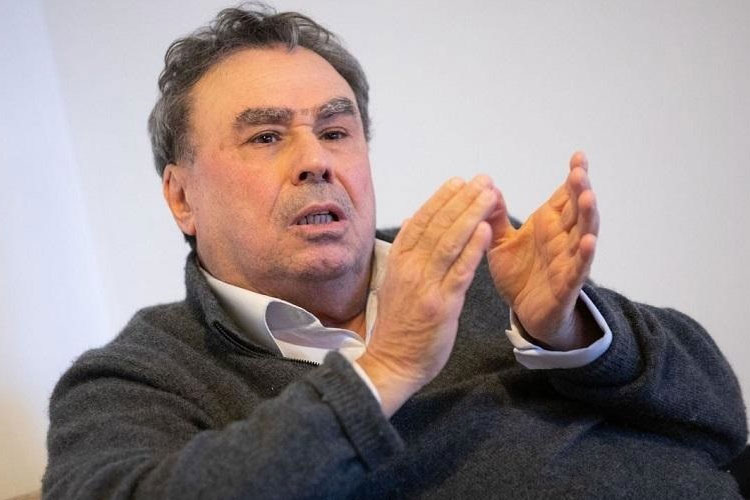
Historian Benjamin Stora stated that there are those who want to manage the Algerian-French relations from the French Ministry of Interior, and this gives the impression that there are still those who think according to an old logic that has been surpassed by time. He called for a realistic treatment of the current crisis, taking into account 132 years of occupation, including tragedies that are difficult to correct with a decision or a step.
Benjamin Stora highlighted the specificity of the French occupation of Algeria compared to its neighbors and other countries that were under French control. Algeria was administered by the French Ministry of Interior, as it was considered a province and part of the French state, and was not a protectorate as was the case for both Tunisia and the Kingdom of Morocco.
He expressed this by saying: “Algeria was not a protectorate, but an integral part of French territory. Therefore, independence was considered an unprecedented loss, unparalleled in Morocco or Tunisia.”
The historian, who is presented in the French media as an advisor to French President Emmanuel Macron on memory affairs, explained that any overcoming of the crisis must pass through establishing “a relationship based on equality.
When French discourse intensifies, especially if it comes from the Ministry of Interior, it brings back to Algeria the image of a guardian ministry interfering in its affairs, as was the case in the colonial era.”
Benjamin Stora, who is considered one of the most prominent specialists in Algerian-French relations, hinted that the conflict that emerged months ago between the French Ministries of Foreign Affairs and Interior regarding relations with Algeria confirms the existence of two prominent trends within the French state apparatus.
The first is that which wants to manage the file from the “Beauvau” palace (Ministry of Interior), and these are those who consider Algeria’s independence a loss of a vast territory equivalent to five times the size of France, and they have not yet recovered from the shock. They are represented by the right and the far-right, and among them, the Minister of Interior who fell with the second Lecornu government stood out.
As for the second team, they are those who are keen to adapt to a bitter reality, which is that “French Algeria” is a thing of the past and that Algeria has become an independent entity. They are keen to manage this file from the “Quai d’Orsay” building (Ministry of Foreign Affairs), and these are trying to reclaim the file in all its details, but they do not have enough courage.
The head of the Memory Committee from the French side presented a discouraging outlook for the future of bilateral relations in an interview he gave last Monday to the French newspaper “Le Télégramme”: “From my point of view, it is likely that there will not be complete calm in the memory file. There are still many unanswered questions, wounds, and feelings.”
Benjamin Stora was asked if the normalization of relations between Algeria and France was possible? He replied: “It remains possible, though complex, given the weight of history and geography. One hundred and thirty-two years of colonial presence have left deep scars, fueled by the diversity of the populations concerned: Algerian immigrants, French soldiers, and Harkis. Added to this is geographical proximity: Algeria, the largest country in Africa, shares a maritime border extending over 1400 kilometers with Europe, making it an essential partner.”
In the opinion of the author of the book “France – Algeria… Anatomy of a Rupture,” co-authored with Thomas Snégaroff, the memory file cannot be resolved “merely by symbolic initiatives and serious statements. It requires a series of initiatives: mutual opening of archives, continued research, and listening to those concerned,” noting that the French “often reduce the French occupation of Algeria to the War of Independence alone, while in reality it extends for a century and a half. This endeavor is long and sensitive by nature. I have been working on these issues since 1974, and I have seen how many advances and setbacks have followed.”
The historian reiterated his criticism of Boualem Sansal regarding territorial integrity: “France drew Algeria’s borders nearly two centuries ago. In the west of the country, the feeling of Algerian identity is deeply rooted…
For example, Mascara, the capital of Emir Abdelkader, is considered a fundamental center in the nation’s history,” noting that some French provinces, such as the province of Nice, were annexed to France, after Algeria was forcibly annexed to France.