These Are The Most Important Amendments By MPs Regarding The 2026 Budget Draft
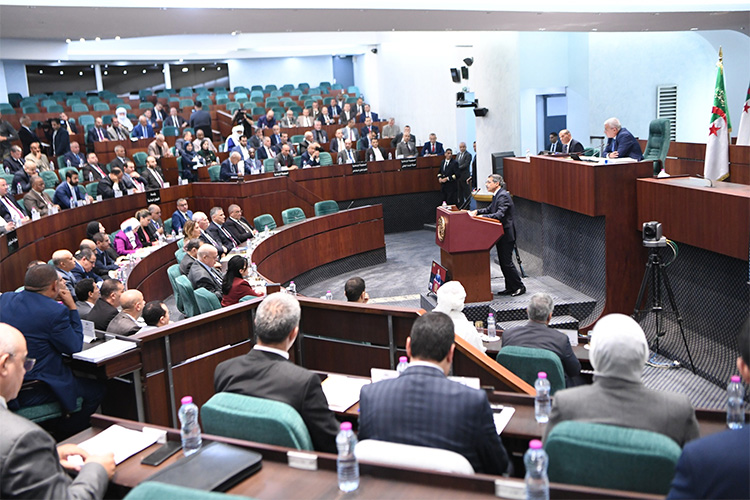
Members of the National People’s Assembly submitted 77 proposed amendments to the Parliament’s office regarding the draft finance law. Most of these amendments focused on strengthening local revenues, regulating public financing, alleviating burdens on citizens in some religious operations such as Umrah, facilitating the import of vehicles less than 5 years old, easing access to investment real estate, preventing external borrowing, protecting the environment, and restricting the process of advances from the treasury.
The Parliament’s office is expected to review these amendments by determining which ones comply with the conditions and referring them to the Finance and Budget Committee for study as part of the supplementary report to the draft finance law.
Among the most prominent amendments, according to what “Echorouk” reviewed, is a proposal submitted by Rachid Charchar, who suggested revising Law No. 25-08, which amends and supplements Law 10-01 concerning waste management, control, and removal. This revision would involve establishing a new annual fee called the “Ecological Fee” to be imposed on every producer or product placer in the market, at a rate of 1.05 percent of annual profits.
The proceeds of this fee will be distributed as follows: 30 percent to the wilaya (province) where the production activity is located, 30 percent to the municipality where the activity’s headquarters are located, 20 percent to the National Fund for Environment and Pollution Removal, and 20 percent to the Joint Fund for Local Communities.
The amendment aims to enhance municipal revenues and grant them greater financial independence in the field of waste collection and management, after the legislator observed that many of them face a deficit in this sector due to their limited resources and reliance on state subsidies.
As for MP Zakaria Belkheir, he proposed, on the financial side, adding a new article stipulating “prohibiting the transfer of public expenditures through borrowing bonds directed to foreigners or foreign institutions.” This amendment aims to close the door to unsecured external borrowing and preserve national financial sovereignty.
The MP justifies his proposal by “the necessity of protecting economic life from dependency and international financial pressures,” noting that issuing bonds directed to foreign entities may open a loophole affecting the state’s financial independence. Therefore, he recommends that financing operations be directed exclusively to the national market.
For his part, MP Ahmed Rabehi proposed exempting Umrah pilgrims from the traveler rights protection fee and submitted an amendment to Article 164 of the law, through which he proposes adding Umrah pilgrims to the category of Hajj pilgrims exempted from the traveler rights protection fee, which is directed to the National Civil Aviation Agency (ANAC).
He justified his proposal by stating that Umrah trips, like Hajj, are of a religious and sacred nature and should not be subject to these fees, considering that extending the exemption to include Umrah pilgrims is a manifestation of facilitating and honoring travelers in the context of worship.