What Are the Goals of the Wave of French Officials’ Visits to Algeria?
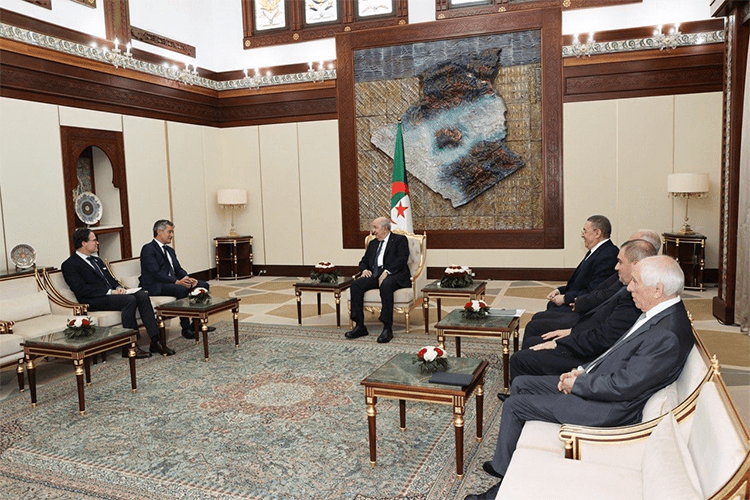
Since February 2026, Algeria has received a series of visits from French officials, including three ministers, members of the Senate and the National Assembly, as well as political figures from outside the ruling party. In contrast, no senior Algerian official, political leader, or prominent civil society representative has traveled to Paris during the same period.
French Interior Minister Laurent Nuñez visited Algeria in February, followed on May 8 by the Minister Delegate to the Minister of Armed Forces, Alice Rufo. Later, on Monday, May 18, French Justice Minister Gérald Moussa Darmanin also traveled to Algeria.
In addition, Anne-Claire Legendre — president of the Arab World Institute and former adviser to the Élysée Palace on North Africa and the Middle East — visited Algeria. Ségolène Royal, head of the influential “France-Algeria Association,” made two visits to Algeria within less than four months.
These visits were accompanied by repeated statements from French officials — including from President Emmanuel Macron himself — stressing the importance of bilateral relations and the need to restore communication channels with Algeria. This came despite attempts by the French right and far right to obstruct the rapprochement, or at least limit its scope, by criticizing the conciliatory approach adopted by the government of Prime Minister Sébastien Lecornu. This strategy marked a clear shift away from the confrontational tone previously adopted by the former interior minister.
On the parliamentary level, French Senator Akli Mellouli and National Assembly member Sabrina Sebaïhi also visited Algeria. By contrast, no Algerian official or influential political figure has traveled to France, except for the anticipated — but still unconfirmed — visit of Interior Minister Saïd Sayoud.
Meanwhile, the French ambassador to Algeria, Stéphane Romatet, resumed his post earlier this month after having left Algeria more than a year ago. At the same time, the Algerian embassy in Paris remains without an ambassador after President Abdelmadjid Tebboune recalled the previous envoy for consultations following France’s controversial decision to abandon its neutrality on the Western Sahara issue — a matter considered highly sensitive within Algeria’s foreign policy doctrine.
How, then, can this sustained wave of French visits to Algeria since the beginning of the year be explained? Why have Algerian officials refrained from making reciprocal visits to France? And how should this diplomatic imbalance be interpreted, given that reciprocity is normally a fundamental principle in bilateral relations?
A diplomatic analyst interviewed by Echorouk argued that France’s determination to rebuild ties with Algeria reflects a fundamental reality: Paris needs Algeria more than Algeria needs France, particularly in the areas of security and regional stability. This is due both to the deep social and human connections between the two countries and to the evolving security landscape in the Sahel following France’s expulsion from several countries in the region.
This assessment is reinforced by previous remarks from French officials noting that security cooperation between France and Russia continued even during the most difficult periods following the Russian invasion of Ukraine. By contrast, security cooperation with Algeria reportedly stopped almost immediately after President Macron announced France’s new position on Western Sahara in July 2024 — a shift that Algeria strongly opposed and a stance that French officials found difficult to accept.
The same diplomatic expert added that the deterioration in bilateral relations has significantly harmed French interests in Algeria across economic, commercial, and cultural sectors, while simultaneously strengthening the presence of competing powers such as Italy, Turkey, and Spain. As a result, France has seen a noticeable decline in its influence in a country long considered part of its traditional sphere of influence in North Africa for historical reasons.
France has also lost a major and stable market for its grain exports, while the Renault factory in Algeria has remained closed for more than five years despite repeated attempts to restart operations. In contrast, Italian automaker Fiat has successfully established a factory in Algeria, with production expected to reach nearly 100,000 vehicles by the end of this year. Until recently, French cars had dominated the Algerian market. Many observers see this shift as the result of poor strategic choices by France, particularly its decision to prioritize investment elsewhere, despite the fact that Algeria had long been a more significant market for French products than the western neighbor.