When Paris Celebrated, a City Was Being Erased
There are dates that do not merely mark time — they expose it. 4 December 1852 is one of them.
On that winter day, Paris glittered. The boulevards glowed with festive lights, salons were filled with dignitaries, orchestras, and the reassuring pomp of imperial ceremony. Napoleon III — triumphant after the first anniversary of his coup — presided over a France intoxicated with its own reflected grandeur.
Two thousand kilometres to the south, another scene unfolded. One the Empire preferred never to record. One the nation preferred never to remember.
In the oasis-city of Laghouat, in the Sahara’s ascending silence, the last survivors were stumbling among the corpses. The smell of death clung to the walls. Children lay lifeless in their mothers’ arms. Whole quarters had fallen silent forever.
The massacre had lasted only forty-eight hours. 2–3 December 1852. Forty-eight hours in which the French army — acting under direct political pressure — extinguished more than 60% of the city’s population.
It was not a battle. It was not even a reprisal. It was a demonstration. A message. A gift of blood intended to arrive in Paris in time for the Emperor’s celebration.
And it did.
I. The Coup that Required a Victory
To understand why Laghouat died, one must return to 2 December 1851, the day Louis-Napoléon Bonaparte dismantled the young French Republic. The dissolution of the Assembly, the arrests, the censorship, the barricades shot down on the Grands Boulevards — all were fresh wounds. Paris still trembled.
When he crowned himself Napoleon III one year later, he needed more than ceremony. He needed legitimacy. And legitimacy, in the logic of 19th-century empires, required an imperial triumph.
Not in Europe. Not before foreign powers. But far away, in Algeria — the laboratory of France’s colonial ambitions, and the theatre where victories could be manufactured without scrutiny.
Laghouat, still unbowed after twenty years of resistance, provided the perfect stage.
II. The Order: “The City Must Fall Before 4 December”
In November 1852, the instruction delivered to General Aimable Pélissier — the same officer who infamously asphyxiated entire tribes in the Dahra caves in 1845 — was blunt:
Laghouat must fall before the Emperor’s anniversary.
Not “should.” Not “if possible.” Must.
The wording was clear in the reports and letters that survived: the fall of Laghouat was to be an imperial offering, a symbolic consolidation of the newborn regime.
Six thousand soldiers. Twelve cannons. A logistical apparatus disproportionate to the city’s size — but perfectly proportioned to the political theatre it was meant to serve.
The siege tightened. Inside the oasis, fear settled with the cold.
III. 2 December — The Day the Sky Broke
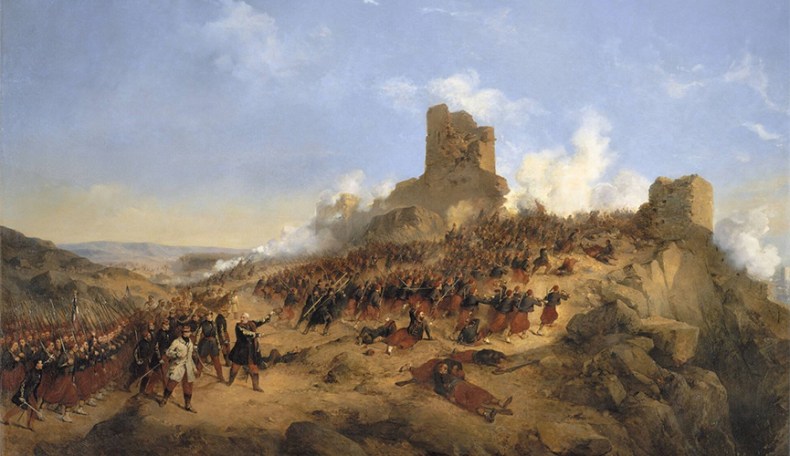
When dawn broke on 2 December, the artillery opened fire. Walls crumbled. Houses split open. Dust mixed with screams.
By midday, breaches had been forced and the troops poured into the maze of narrow streets.
The instructions were not ambiguous: “No prisoners.” “Cleanse the city.”
Eyewitness letters, kept for decades in private trunks, are chilling:
“The men lost all restraint. They killed, looted, violated. The streets were rivers of blood. It was hell on earth.”
Men were cut down. Women were assaulted and murdered. Children were thrown into wells. Elders burned inside their homes.
This was not combat. It was obliteration.
IV. 3 December — The Erasure
By the second morning, the resistance was broken. What remained was what General Pélissier called, with terrifying coldness, “le nettoyage” — the cleaning.
House by house. Room by room. Life by life.
The troops dragged out survivors and executed them publicly. Manuscripts were burned. Shrines desecrated. Families suffocated or thrown into pits. Some witnesses reported a “stinging smoke” in the alleys — a detail which, when cross-examined with French military practice, raises the possibility of chlorinated suffocating agents decades before the first acknowledged use of phosgene in 1915.
A century of historiography would ignore this. But oral memory did not.
By nightfall, Laghouat was a city emptied of its people.
V. 4 December — Paris Applauds
As Laghouat was being buried under its own silence, the Tuileries Palace was alive with music.
In the middle of the reception, a messenger arrived. Napoleon III opened the dispatch. His face lit up.
“Laghouat has fallen. Victory complete.”
Applause. Toasts. Self-satisfaction disguised as Providence.
The Moniteur universel, the imperial newspaper, celebrated the “civilising triumph” of France in Algeria.
Meanwhile, in Laghouat, dogs tore at unburied bodies.
Two worlds. One truth.
VI. “The Year of Emptiness”
The survivors — few, stunned, trembling — later named 1852 “Aam El Khaliya,” The Year of the Void.
The void of homes. The void of voices. The void of lineage.
But France was not done.
Confiscations followed. Forced deportations. The closing of religious schools. The resettlement of colonists on stolen land. The renaming of neighbourhoods to erase what memory could not.
This was not only the destruction of a population — it was the destruction of its possibility of remembrance.
VII. A Genocide Before the Word Existed
The term genocide would not be coined until 1944. The Convention would not be drafted until 1948.
But Laghouat meets every criterion:
• Deliberate intent to eliminate a group
• Mass killing
• Targeting civilians
• Inflicting conditions of destruction
• Cultural erasure
• Seizure of land and suppression of identity
Laghouat may well be one of the first documented genocides of the modern era — and almost certainly the first carried out in the name of a European “civilising mission.”
VIII. The Gas: A Pre-Ypres Chapter Few Dare to Examine
The testimonies recorded in Algeria describe:
“air that burned the throat,”
“families found dead without wounds,”
“a suffocating smoke released in alleys.”
French officers themselves note the use of “fumées irritantes” — irritating fumes — to drive inhabitants from homes and underground shelters.
Pélissier had used asphyxiating smoke in Dahra. The French army had experimented with chemical combustion in Algeria. The chronological alignment is disturbing:
Laghouat 1852 → Dahra 1845 → Ypres 1915
A line of continuity rarely acknowledged in European military history.
Laghouat may well represent one of the earliest uses of chemically suffocating agents against civilians.
IX. Why Tell This Story Now?
Because history unspoken is history repeated. Because silence is complicity. Because remembrance is not revenge, but justice.
Pélissier wrote triumphantly:
“Laghouat will be an eternal lesson for the Arabs.”
He was right in one sense. But the lesson was not for the inhabitants of Laghouat.
It was for the West itself: that empires are built not only on laws and flags and ceremonies — but on the graves they choose not to see.
Laghouat has waited 173 years for its truth to be spoken plainly. It asks for no hatred. No vengeance. Only recognition. Only remembrance. Only the dignity of finally being told in the language of history — not in the footnotes of empire.