When Truth Becomes Raw Material… and Narrative Becomes a Weapon
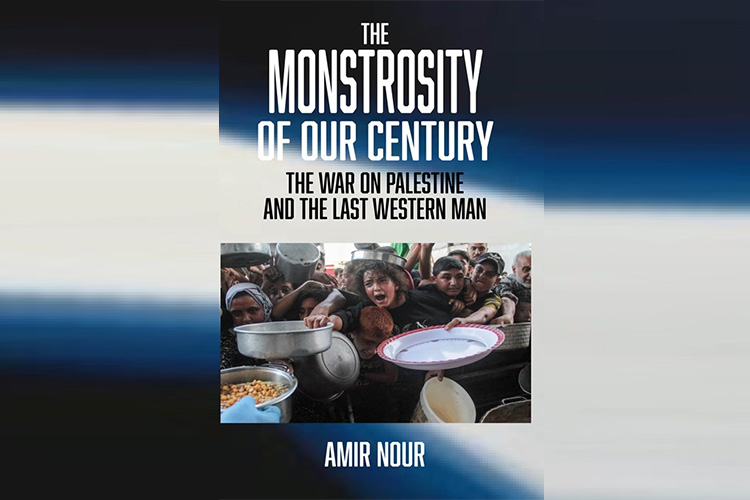
When the reader closed the final page of the first article, they did not shut a door—they opened a corridor. A corridor leading step by step into the unseen zone where tragedy stops being an event and becomes a file, where a scream becomes a report, and where a crime becomes a “context.” Amir Nour’s The Monstrosity of Our Century does not simply place the reader before the truth; it pulls them downward into the layer beneath it: the layer of manufacture—of truth, of narrative, of consciousness itself. In the first chapter we confronted blood. In this second article, we confront something more dangerous than blood: the machine that determines its shape, its color, its scale, and its visibility.
1. A World Dismantled and Reassembled
This book does not begin from above, as traditional works do. It begins with a small point that expands page after page: How is the world reconstructed in the public mind? Every sentence carries a silent question: Is what we see truly what happened, or merely what we are allowed to see? Is the event itself the source, or the image? Is truth what unfolds, or what is presented as “what unfolded”? Gradually, the reader senses a shift: the world they inhabit is not cohesive but curated—a mosaic assembled with precision, its colors and angles chosen by the global order. The author does not accuse; he exposes. He reveals a structure operating quietly for decades, a structure that turns reality into a media product, pain into raw footage for editing, and the human being into a dispensable detail.
2. When Language Becomes the Real Operating Room
If the first article revealed the blood, this one reveals the cleaning instruments. Language is no longer a mirror but a polishing device. The words we hear daily are engineered to conceal more than they reveal. Every term carries political fingerprints. The book does not say language deceives; it says something far more dangerous: language numbs. Calling a massacre an “operation,” bombing a “strike,” forced displacement “migration,” starvation “humanitarian pressure”—these are not linguistic choices but the erosion of moral instinct itself.
3. Maps Drawn Behind Closed Doors
Between the lines, the book makes clear: the world is not shaped by chaos or by sudden crises but by engineering. Governments, economic blocs, military alliances, and media giants all participate. Catastrophe does not begin when the first bomb falls; it begins in meeting rooms where permissions are granted, limits set, narrative frames drafted, and the visibility—then disappearance—of tragedies negotiated. Nour never states this explicitly; he lets the reader sense it in the blank spaces, in the quiet suggestion that the world no longer moves according to ethics but according to the technologies that manage images.
4. The Human Being… the Victim Who No Longer Knows They Are One
As the emotional pace rises, the central question shifts. It is no longer What happened? or Who did it? but: What happened to us? How did we reach the point where we see blood and simply continue our day? Where tragedy becomes another notification? Where destroyed cities merge into the background noise of “breaking news”? Where the screams of survivors become ambient sound? The book does not condemn humanity; it awakens it. Humans did not lose their ability to feel—they lost the space where feeling is allowed. That space has been shrunk by repetition, algorithmic logic, and the normalization of horror.
5. The Great Truth This Century Fears Most
The first article removed the mask; this one reveals the flesh beneath it. And the conclusion the book leads the reader toward—without writing it—is this: modern power no longer lies in weapons or wealth or political influence but in the ability to determine what counts as truth. Whoever controls the narrative controls the world. Whoever controls language controls history. Whoever controls images controls the collective conscience. Whoever controls platforms controls what humanity sees—and what it will never see. This is what makes The Monstrosity of Our Century so unsettling: it does not offer theories; it offers a mirror—a mirror that does not show the world as it appears, but as it is.
Conclusion of This Article… and the Beginning of the Next
This book does not seek followers or sympathizers. It seeks witnesses—people willing to see the world, even once, without its cosmetic layers. This second article does not explain the book; it fractures the narrative the global powers work tirelessly to preserve. The third article will take us inside the book’s hardest core: how truth is managed internationally, how consciousness is engineered behind closed doors, and how global ethics have become decorative—invoked when useful, discarded when burdensome. Because truth, as the book implies, does not need light. It needs a reader unafraid to open their eyes.