Will French Efforts Succeed in Repairing the Damage Macron Has caused?
In recent weeks, Algerian-French relations have witnessed a cautious rapprochement, accompanied by attempts by the French side to obstruct progress.
This was exemplified by ill-advised statements from French Foreign Minister Jean-Noël Barrot. These developments coincided with simmering Algerian resentment over Paris’s role within the United Nations in supporting the Moroccan regime in the Western Sahara conflict.
It all began with calculated overtures by French Interior Minister Laurent Nuñez, who announced receiving an invitation from his Algerian counterpart. This came after Nuñez distanced himself from the “iron fist” policy pursued by his predecessor at the Beauvau Palace, Bruno Retailleau, whose aim was to destroy bilateral relations. Retailleau was ousted from the former government, having achieved nothing and losing much in his political project to storm the Élysée Palace through exploiting the worsening relations between Algiers and Paris.
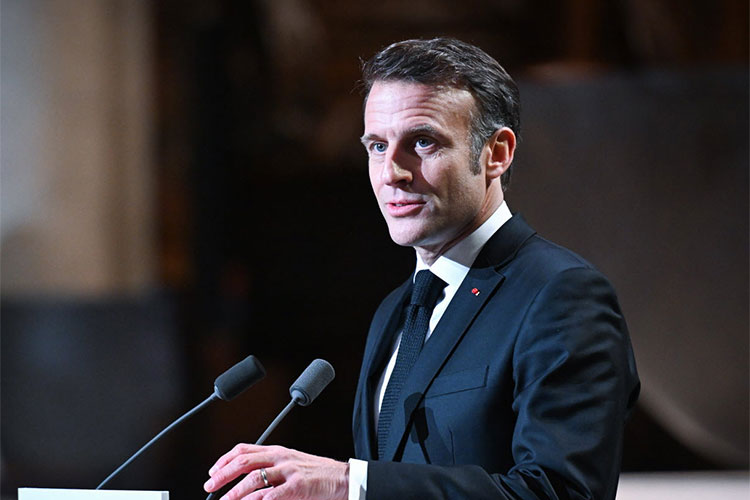
For his part, French President Emmanuel Macron, who is out of favour at Algiers Mouradia Palace, was closely monitoring the situation. He used the 71st anniversary of the outbreak of the Algerian War of Independence against the brutal occupier to send a congratulatory message to his Algerian counterpart, Abdelmadjid Tebboune. This message was lost amidst a flood of congratulations from other presidents, kings, and emirs of brotherly and friendly nations.
This was followed by a hesitant outburst from the French Minister for Europe and Foreign Affairs, Jean-Noël Barrot, who spoke of his country’s desire to restore security cooperation and the role that French companies had lost in Algeria. These companies enjoyed countless privileges before Macron’s reckless decision to support the Moroccan autonomy plan for Western Sahara shattered all hopes of France regaining its interests in its former colony.
This raises the question: To what extent can these overtures dispel the dark clouds hanging over Algerian-French relations? Can a visit by a French minister to Algeria, which remains uncertain, restore normalcy, especially given the significant damage Macron’s policies have inflicted on bilateral relations for over a year?
Political science professor and member of the National People’s Assembly, Ali Rebidj, believes that the damage inflicted on Algerian-French relations by France’s ill-considered actions is far greater than mere statements or the prospect of visits by some French officials to Algeria. He explained, “I don’t believe that the French Interior Minister’s visit to Algeria means we’ve resolved the thorny crisis plaguing bilateral relations.”
In an interview with Echorouk, he added, “I don’t share the view that Algerian-French relations are improving. On the contrary, this visit might indicate that the French position was held hostage by the far right, and that decision-making circles in Paris feel this crisis has damaged France’s image, standing, and interests in Algeria.”
According to the political analyst, the French side, particularly Macron’s camp in power, lacks the necessary seriousness to repair bilateral relations. This is evidenced by its involvement in passing the parliamentary motion submitted by the far-right National Rally party, which calls for the abrogation of the 1968 agreement.
Rebidj asserted, “From my perspective as an observer of the Algerian-French crisis, I believe there is no genuine intention on the part of the French side to repair the damage inflicted on Algerian-French relations.”
He went on to explain: “The role played by Macron’s party in voting for the far-right motion in the French National Assembly cannot be denied. Many members of the party bloc, led by Gabriel Attal (head of Macron’s Renaissance party and former Prime Minister), were absent from the voting session, and those who were present voted in favour of the motion. This exposes the practices of the French president and his inner circle.”
The parliamentary vote on the resolution is not the only thing that exposes the French side’s “treachery” and “hypocrisy.” Leaks from behind closed doors have also revealed the active role of French diplomacy, under directives from the Élysée Palace, in rescuing the Moroccan regime from an imminent defeat at the United Nations regarding the Western Sahara issue.
Paris exerted significant pressure on its EU neighbours—Denmark, Slovenia, and Greece, all non-permanent members of the Security Council—to vote for the UN resolution before it was amended multiple times. This confirms, yet again, that the French cannot be trusted.
From this standpoint, the MP Rebidj believes that Algeria will not “offer a lifeline to the French president as he approaches the end of his term, given that he was the one who initiated the repair of bilateral relations and the one who was involved in ‘spoiling this relationship’,” calling for “cautious handling of these steps that are now taking shape on the horizon by the current French government, or even by Macron, who, unfortunately, deepened the crisis, and it can be said that it is too late for Macron to repair what he has spoiled.”