Gas Prices Are Soaring Globally And “Sonatrach” Faces A Free Market Opportunity
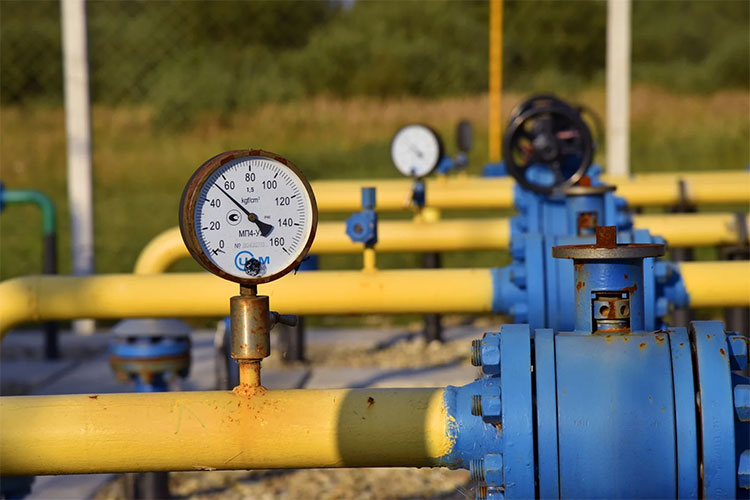
An ideal scenario is emerging for the national hydrocarbons company “Sonatrach” to offer additional quantities of gas in the international market, especially the free market, given the very attractive prices for this energy source, which crossed the barrier of 90 euros per 1 megawatt/hour during trading on Monday, October 19, in Europe.
In this context, energy expert Mr. Baghdad Mendouche believes that the reasons for the current rise in gas prices are mainly due to the ongoing disturbances in the Middle East and the continued closure of the Strait of Hormuz to global energy supplies, a passage through which nearly a quarter of global gas production passes.
Mr. Mendouche, who previously served as CEO of a “Sonatrach” subsidiary, explained in a statement to “Echorouk” that the decline in inventories among consumers, especially in Asian and European countries, coinciding with the hike in demand for this energy source, contributed to the price increase, amid high demand and low supply.
He added that the winter season, during which demand for gas rises in consuming countries, especially in Europe, is not far away, as the impact of seasonal demand is expected to continue until the first quarter of next year.
According to International Energy Agency forecasts, Mr. Mendouche further stated, global gas prices will remain on an upward trend until the end of the year if the closure of the Strait of Hormuz continues and disturbances in the region persist, especially regarding shipping and transport.
Regarding “Sonatrach” opportunities to benefit from these high price levels, Mr. Mendouche confirmed that current conditions provide the company with a favorable opportunity to offer additional quantities of gas in the free market and benefit from the recorded prices, explaining that the bulk of the quantities marketed by “Sonatrach” fall under long-term contracts, especially with Italy and Spain, whether via pipelines or gas tankers.
The latter pointed out that gas prices in long-term contracts are pre-determined according to the terms of each contract, with mechanisms allowing for their adjustment according to concluded agreements, which distinguishes them from transactions in the free market that are affected by prevailing price levels.
Regarding the possibility of increasing gas exports, Mr. Mendouche underscored that this requires enhancing production and raising recovery rates in fields, along with developing discovered reservoirs, which are measures linked to the medium and long term, also noting the role of solar stations in reducing gas consumption directed to electricity production, as the entry of new stations into service allows for replacing part of the gas used in electric power production, whether to meet domestic consumption or to direct additional quantities toward export.
In the foreseeable future, Mr. Mendouche pointed to the possibility of allocating quantities of gas intended for electricity production for export, given the surplus available in Algeria, considering that the current period is appropriate in terms of consumption levels, as it does not witness high temperatures that increase the use of air conditioning and the accompanying gas consumption in electricity production, nor low temperatures that drive households to use heating devices intensely, which in turn raises gas consumption.
The Minister of Hydrocarbons, Mr. Mohamed Arkab, revealed a few days ago before the Finance and Budget Committee of the National People’s Assembly that the price of Algerian gas marketed under long-term contracts is 11 dollars per million British thermal units, noting that these prices are fixed within contracts that guarantee the marketing of agreed-upon quantities throughout their duration, unlike the free market which is based on the principle of offering quantities for sale in the spot market according to prevailing prices, which change according to supply and demand levels and geopolitical conditions.
The measurement unit of a million British thermal units (MMBtu) differs from the megawatt-hour (MWh), although both are used to measure energy, the first expresses the amount of heat energy required to raise the temperature of a specific amount of water, while the second measures the amount of energy produced or consumed during an hour.