Washington Times: “President Tebboune Is An Example Of A Brave And Seasoned Leader”

-
-
778
-
0
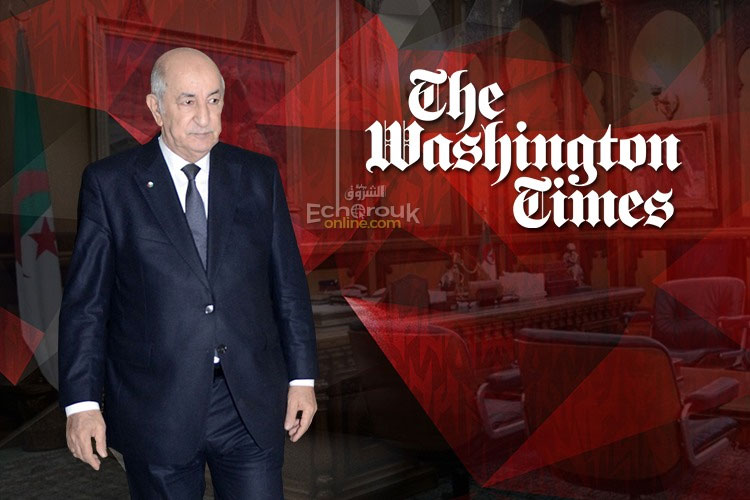
The American “Washington Times” newspaper praised the sound policy pursued by President Abdelmadjid Tebboune in the face of the dire economic conditions resulting from the spread of the Coronavirus pandemic, and its effects on the economy.
The “courageous” economic and constitutional reforms undertaken by President Abdelmadjid Tebboune should help Algeria to overcome the economic crisis and come out of it stronger than ever, according to a new American analysis published by the Washington Times.
“But it seems that President Tebboune is determined to follow a path that can make Algeria both a modern example of how to overcome a crisis and come out of it stronger” than it was at the beginning, writes David Keene, the author of the analysis.
For the Washington Times, President Tebboune “is proving to be a tough and skillful leader” at a time when the country, heavily dependent on hydrocarbon revenues, is facing “unprecedented challenges” related to the economic crisis caused by the Coronavirus pandemic.
President Tebboune, refused to resort to external borrowing to avoid the debt burden on future generations, said David Keene, also a Washington Times publisher and former chairman of the Republican National Committee.
It is in this context that the President of the Republic decided to cut the government’s budget in half to avoid “mortgaging the future of the nation” to other countries, he notes.
David Keene wonders about the number of national leaders who have the courage of President Tebboune to “suffer short-term criticism” in order to ensure that his country does not find itself in a situation of insolvency at the end of the pandemic.
In fact, “few leaders fearing pressure from vested interests” are prepared to make budget cuts when they are needed, Keene said.
There are many examples, both in the United States and in other developed countries with good credit ratings, where leaders and elected officials have preferred to resort to debt by relegating the burden of debt to their successors.
The consequences are also often severe for the citizens of these countries, who would have to bear higher taxes and inflation in order to be able to honor the debts contracted by the governments.
In sum, the decisions taken by the President are “a lesson” for leaders on “the courage and leadership needed for governance in times of crisis,” he said.
In the same vein, Keene says that critics who predicted “a chaotic presidential election” that would resolve little in Algeria “were wrong”.
“Abdelmadjid Tebboune was elected by 54% of the votes in a vote that observers agreed to (describe) as free and fair and which saw the participation of at least one of the most critical voices of the government,” he said.
Wise analyst David Keene predicts that these courageous budget decisions will be challenged by special interest groups both locally and internationally.
And don’t rule out the possibility that major international dailies may come into play to attack the government’s social policy.
According to the US daily, the Tebboune Administration’s greatest challenge is to consolidate the people’s confidence in its government.
This is how the President launched fiscal and regulatory reforms to create jobs and reduce the country’s heavy dependence on hydrocarbons, at a time when the Covid 19 pandemic forced him to postpone much of the programme he wanted to accomplish.
In parallel with these economic reforms, Algeria has proposed a series of constitutional amendments that will limit the terms of office of the president and those of elected members of parliament to two and at the same time strengthen the independence of the judiciary.
The government is also playing a more important role in restoring peace in the region, the author further underlined.